

Introduction: The Temptation That Costs You Money
Let’s be honest. You’ve probably done it before. You need to reduce the flow in a pipeline, and there’s a ball valve right there with a handle. It seems so simple—just crack it open part-way. Less flow, problem solved. It works like a faucet, right?
Wrong.
This seemingly harmless habit is actually the number one way to destroy a ball valve. And yet, engineers and maintenance teams around the world keep making this mistake every single day. They treat a ball valve like a dimmer switch when it’s really just an on/off light switch.
Here’s the thing: ball valves are designed for one job and one job only—to start or stop flow. They’re not meant to regulate anything. When you force them into a role they weren’t built for, you’re not just shortening their life; you’re creating a safety hazard, wasting energy, and setting yourself up for unplanned downtime.
So why does this happen? Why does a partially open ball valve self-destruct? And what should you use instead? Let’s break it down.
How a Ball Valve Actually Works
Before we talk about why ball valves fail at throttling, we need to understand how they work in the first place.
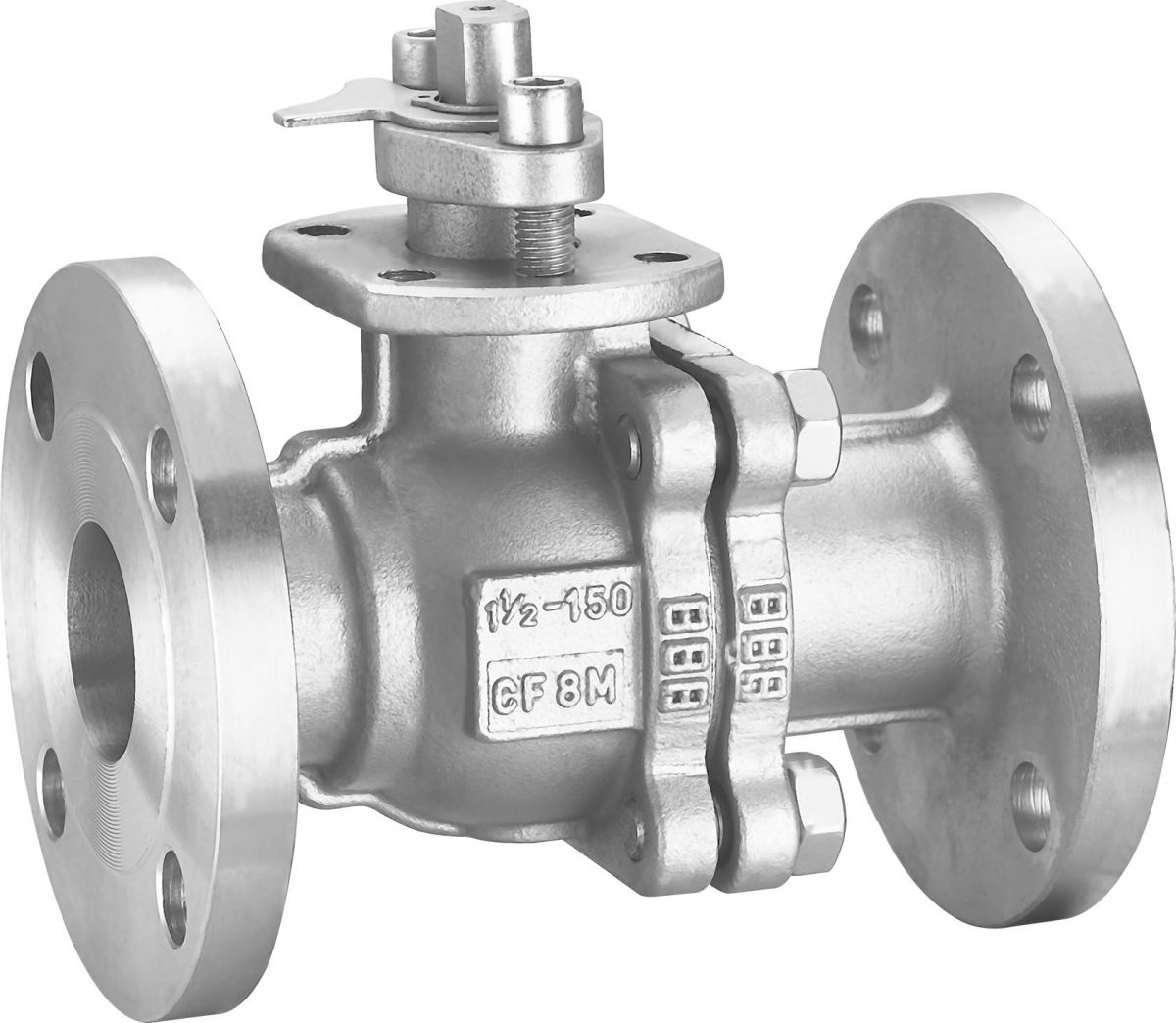
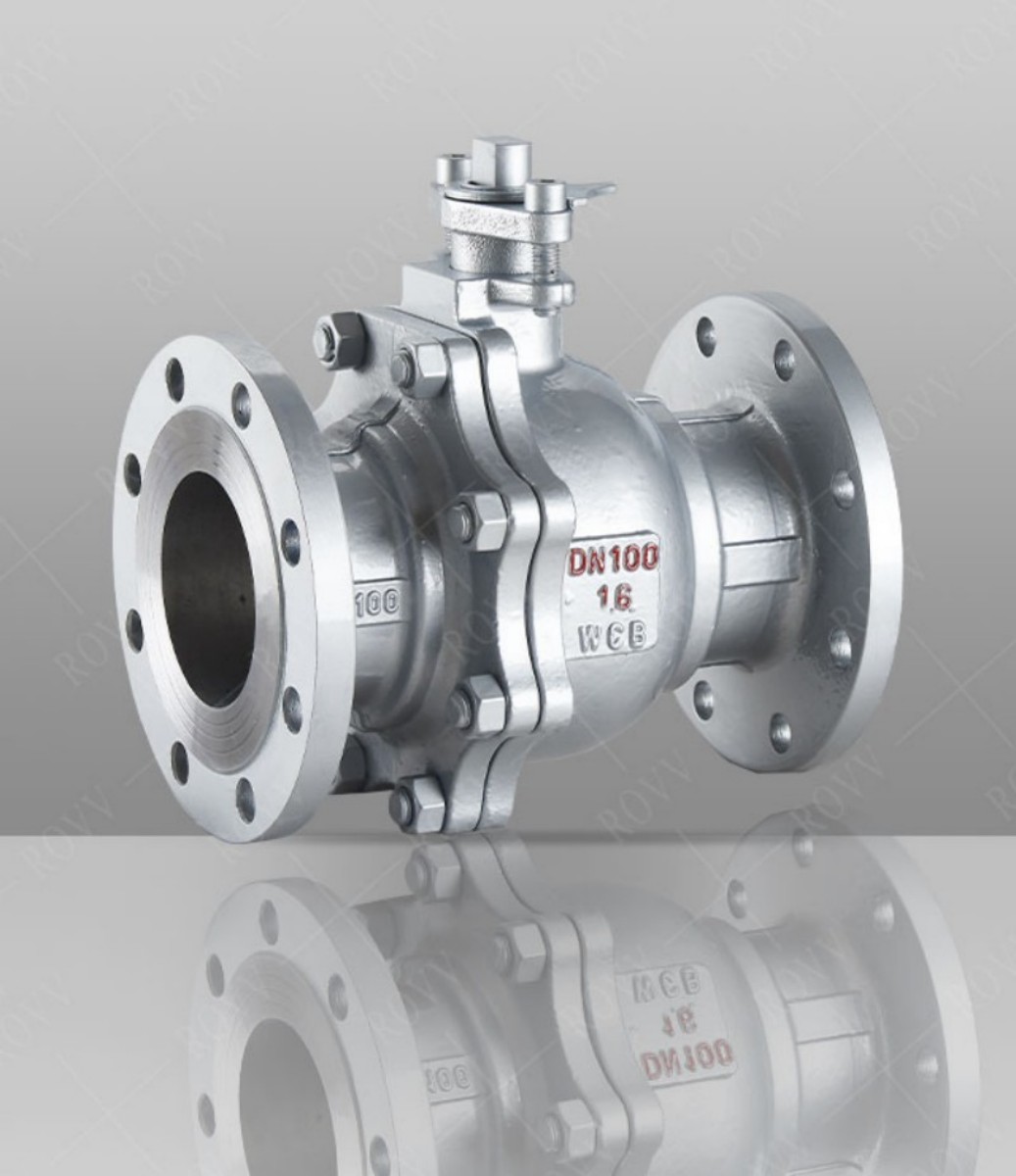
Inside a ball valve, there’s a metal sphere—the ball—with a cylindrical hole bored straight through its center. This ball sits snugly inside the valve body, held in place by seat rings that create a tight seal.
When the handle is parallel to the pipeline, the hole in the ball aligns perfectly with the flow path. Fluid passes straight through with almost no resistance—it’s like flowing through a short piece of pipe. This is the fully open position.
Turn the handle 90 degrees—a quarter turn—and the solid side of the ball rotates into the flow path, completely blocking the passage. This is the fully closed position. No flow gets through.
That’s it. Two positions. Open. Closed. That’s all a standard ball valve is designed to do.
The beauty of this design is its simplicity. Quarter-turn operation means fast actuation. The straight-through path means minimal pressure drop. And the soft seats provide excellent bubble-tight shut-off when the valve is new.
But here’s the catch: when the valve is fully open, the fluid barely touches the seats. When it’s fully closed, the upstream seat is protected. In these two positions, the valve is safe.
The trouble starts the moment you leave it somewhere in between.
The Physics of Failure: What Happens When You Throttle a Ball Valve
When you partially open a ball valve, you’re not “reducing flow” in a controlled way. You’re creating a high-velocity, turbulent jet that acts like a sandblaster aimed directly at the valve’s soft seat.
Here’s what’s actually happening inside that valve:
1. The Crescent-Shaped Orifice
A partially open ball creates a crescent-shaped opening. Instead of flowing smoothly through the full bore, the fluid is forced through this narrow gap. All the flow that used to fill the entire pipe is now squeezed into a tiny opening.
2. Velocity Skyrockets
When you squeeze fluid through a small opening, its velocity increases dramatically. Think about putting your thumb over the end of a garden hose—the water shoots out much faster, right? Same principle.
3. The Jet Effect
This high-velocity stream doesn’t just flow through and continue on its way. It’s aimed directly at one small, exposed area of the downstream seat. The fluid hits that spot like a pressure washer, blasting away the soft seat material.
4. Erosion Takes Over
Any suspended solids in the fluid—sand, rust particles, debris—act like tiny bullets. They impact the seat at high speed, cutting channels into the material. Over time, these channels grow deeper and wider until the seat can no longer seal.
5. Cavitation Makes It Worse
In liquid applications, there’s an even more destructive force at work: cavitation. As the fluid speeds up through the narrow gap, its pressure drops. If the pressure drops below the liquid’s vapor pressure, tiny vapor bubbles form. When these bubbles move past the restriction and pressure recovers, they collapse violently—like microscopic explosions.
These implosions blast away material from the ball and seats, leaving behind telltale pitting and damage. You might hear a strange rumbling or hissing from that partially open ball valve. That’s not the sound of flow control—it’s the sound of your valve eating itself alive.
The Damage: What Happens to the Valve Over Time
The destruction doesn’t happen overnight. But it happens faster than you might think.
Week 1: The valve seems to work fine. Flow is reduced, and everything looks normal.
Week 4: You start noticing that the valve doesn’t close as tightly as it used to. Maybe there’s a small drip.
Month 3: The valve is now leaking noticeably when closed. The seat has been eroded to the point where it can no longer create a bubble-tight seal.
Month 6: The valve is essentially useless. It won’t seal at all, and you’re looking at replacement costs, downtime, and lost productivity.
The high-velocity flow creates uneven wear on the seals based on partial exposure to the flowing media. The leading edge of the ball and the exposed seat surface take the brunt of the damage. Once the soft PTFE or other seat material is compromised, the valve will never seal properly again.
And here’s the kicker: the higher your pressure and flow rate, the faster the destruction happens. In high-pressure water systems, pump discharge lines, or any application with significant pressure drop, the erosion and cavitation are even more severe.
The Flow Characteristic Problem
Even if you somehow managed to prevent physical damage—which you can’t—there’s another problem: ball valves have terrible flow control characteristics.
A standard ball valve’s flow characteristic is essentially a flat line until about 40% open, then flow increases dramatically from 20% to over 90% of capacity between 40% and 80% open. This means:
- Below 40% open: Almost no control. Small changes in position make very little difference to flow.
- Between 40% and 80% open: Tiny changes in position cause huge changes in flow. It’s nearly impossible to make precise adjustments.
- Above 80% open: You’re basically fully open anyway.
This nonlinear behavior makes ball valves nearly useless for any application requiring stable, repeatable flow control. Pressure changes in the system? Flow fluctuates wildly. Need to maintain a specific setpoint? Good luck.
The globe valve, by contrast, has a much more linear characteristic, giving you smooth, predictable control across the entire travel range. That’s why globe valves are the standard for throttling applications.
What About V-Port Ball Valves?
Now, you might have heard about V-port ball valves. These are specialized ball valves with a V-shaped notch cut into the ball. This design allows for some throttling capability and provides better flow characteristics than a standard ball valve.
But here’s the catch: V-port ball valves are specialty items. They’re more expensive, they’re not what you’ll find on most shelves, and they’re designed for coarse control, not precision regulation.
Even with a V-port design, you’re still dealing with a rotary valve that has inherent limitations compared to a proper globe valve. The recovery factor is still poor, and cavitation and pressure drop issues remain.
If you absolutely must use a ball valve for throttling, a V-port or segmented ball valve is the way to go. But for most applications, you’re better off choosing the right valve from the start.
The Right Tool for the Right Job: What to Use Instead
So if you can’t use a standard ball valve for flow regulation, what should you use?
Globe Valves: The Throttling Champion
For most flow regulation applications, the correct choice is a globe valve.
Globe valves are specifically designed to handle the high-velocity forces of partially-open service. Here’s why they work:
- Tortuous flow path: The fluid is forced through an S-shaped or Z-shaped path. This intentional restriction is what gives you control.
- Protected seating surfaces: When throttling, the high-velocity flow is directed into the center of the valve, away from the seating surfaces.
- Hardened internals: The primary wear occurs on a hardened, replaceable plug and seat, ensuring the valve can still shut off tightly even after extended throttling use.
Globe valves provide precise, repeatable flow control at any position between fully open and fully closed. They’re the industry standard for cooling water control, steam bypass, chemical dosing, and any service requiring stable intermediate positions.
A Quick Comparison: Ball Valve vs. Globe Valve for Throttling
| Criterion | Standard Ball Valve | Globe Valve |
| Primary function | On/off isolation | Flow regulation (throttling) |
| Throttling capability | Poor (damages seats) | Excellent |
| Flow path | Straight-through, low restriction | Z-shaped, high restriction |
| Throttling wear | Severe damage to soft seats | Acceptable wear on hardened plug & seat |
| Shut-off capability | Excellent, bubble-tight (when new) | Good, Class IV-VI |
| Flow characteristic | Nonlinear (poor control) | Linear or equal-percentage |
| Operating speed | Fast (quarter-turn) | Slow (multi-turn) |
| Cost | Lower | Higher |
Common Mistakes That Cost You Money
Mistake #1 — Using a standard ball valve for throttling. This is the most common and most expensive mistake. The seat erosion we’ve described will cause the valve to fail within months, and you’ll end up replacing it far sooner than expected.
Mistake #2 — Thinking “it’s just temporary.” Many operators crack open a ball valve “just for now” and plan to fix it later. But “temporary” has a way of becoming permanent, and by the time you remember to fix it, the valve is already damaged.
Mistake #3 — Assuming all ball valves are the same. V-port ball valves are different from standard ball valves. Don’t assume that because one type works for throttling, all ball valves do.
Mistake #4 — Ignoring the sound. That hissing or rumbling from a partially open ball valve isn’t normal operation—it’s cavitation destroying your valve from the inside.
Mistake #5 — Choosing based on price alone. A cheaper ball valve used for throttling will cost you far more in replacements, downtime, and lost productivity than a properly selected globe valve.
When Is It Okay to Use a Ball Valve?
Let’s be clear: ball valves are excellent valves. They’re just excellent at the wrong job for throttling.
Use ball valves when:
- You need on/off isolation
- You need fast quarter-turn operation
- You need minimal pressure drop when open
- The valve will be either fully open or fully closed during normal operation
- You need bubble-tight shut-off (with soft seats)
Don’t use ball valves when:
- You need to regulate flow rate
- The valve will spend significant time in a partially open position
- You need stable, repeatable flow control
- The application involves high pressure drops
Conclusion: Two Positions, Not Infinite
The ball valve is one of the greatest inventions in fluid handling. It’s simple, reliable, fast-acting, and provides excellent shut-off. But like any tool, it has its limitations.
A ball valve is designed for two positions: fully open and fully closed. That’s it. It’s not a dimmer switch; it’s an on/off switch. Treating it like anything else is asking for trouble.
The high-velocity jet created by a partially open ball valve acts like a sandblaster, eroding the soft seat material and making a bubble-tight seal impossible. Cavitation and erosion eat away at the seat, cutting channels into it until it can no longer seal. And even if you somehow avoided the physical damage, the terrible flow characteristics make precise control nearly impossible.
If you need to regulate flow, choose a globe valve or a purpose-built control valve. They’re designed for throttling, they protect their seating surfaces, and they give you the precise control you need.
Remember: the best valve isn’t the cheapest one or the most expensive one—it’s the one that matches your application’s real demands. Use the right tool for the right job, and your valves will last longer, your system will run better, and you’ll save money in the long run.
Post time: Aug-11-2026